the Sign
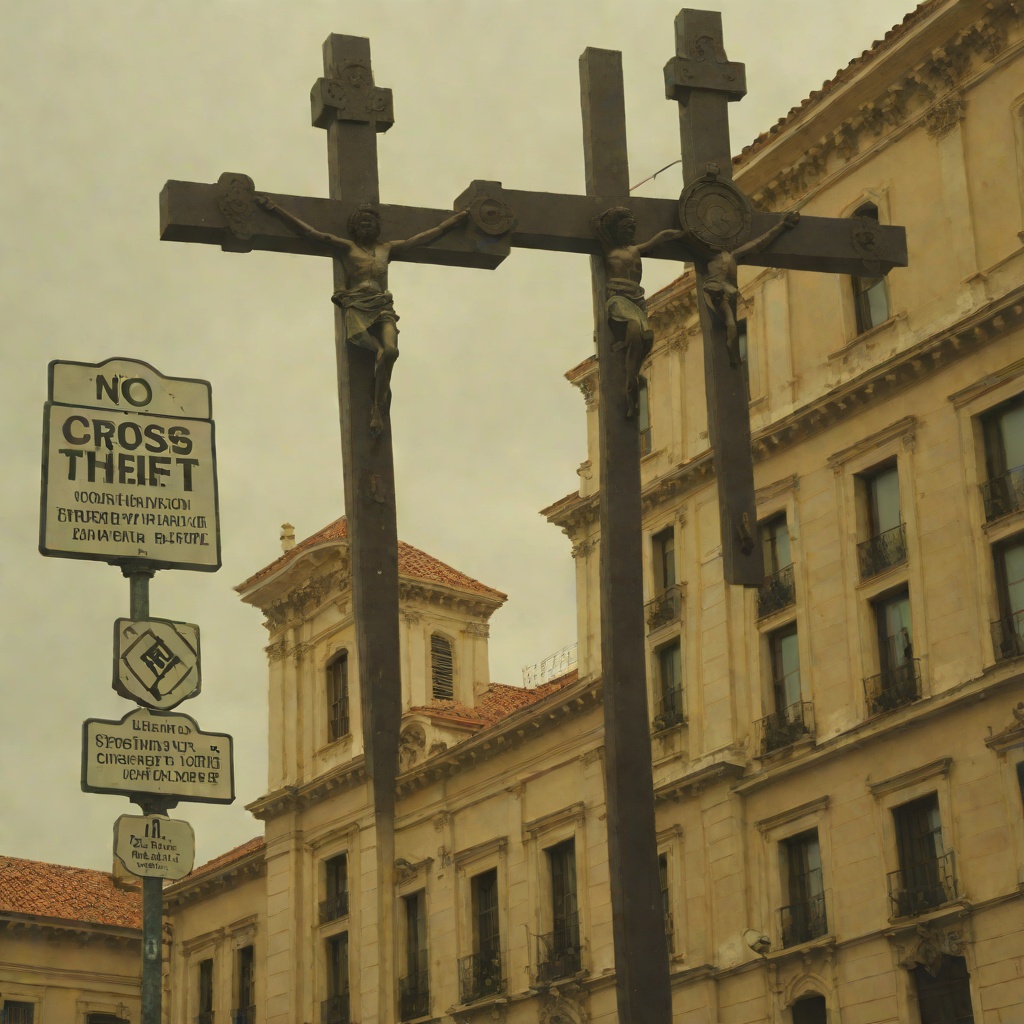
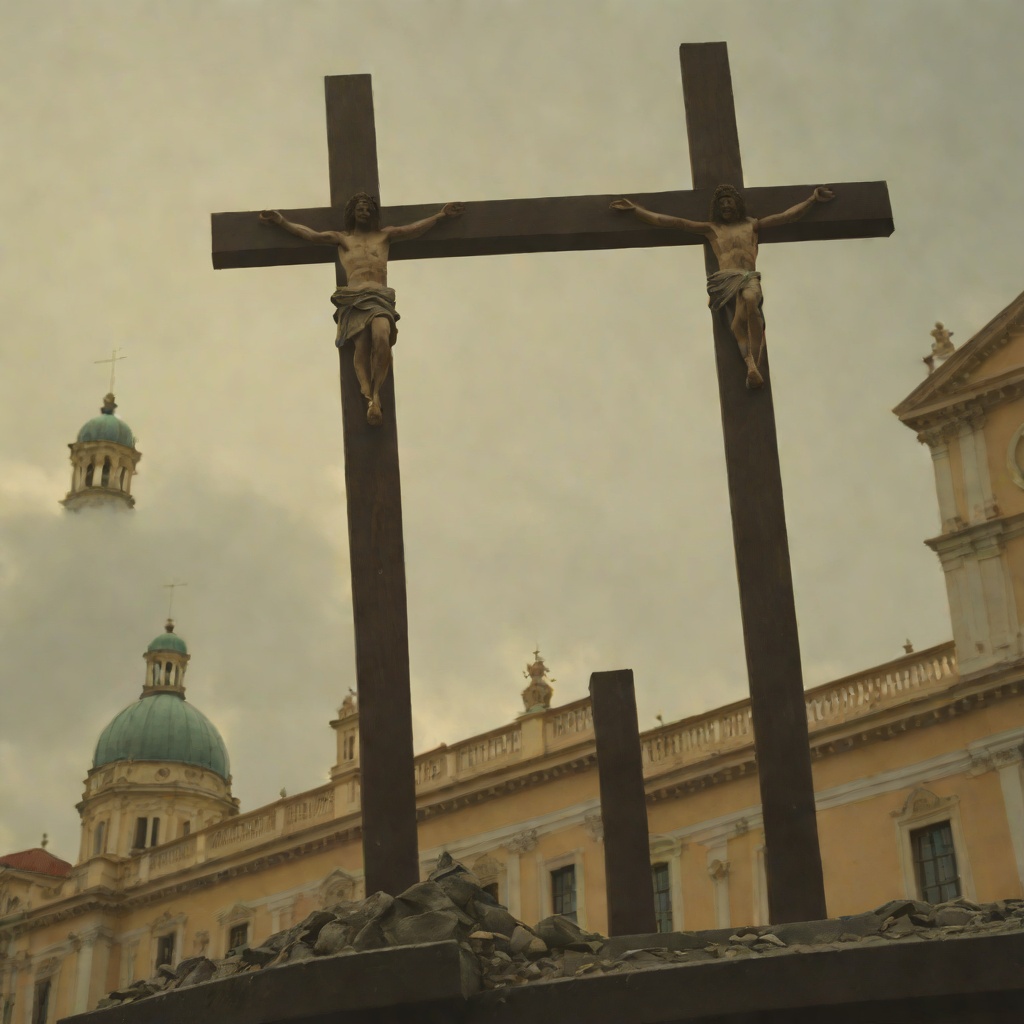
City of GodThe Sign is the novel's central form of ambiguous revelation: the appearance of the brass cross of St. Timothy's Episcopal Church on the roof of the Synagogue of Evolutionary Judaism. For Pem, its force does not depend on identifying the people who moved it or assigning it a stable message. The Sign matters because he recognizes it as a Sign, an occurrence that arrives from outside deliberate interpretation and alters the obligations of the person who receives it. Its meaning remains incomplete, but its demand is decisive: Pem must become attentive to what his life is showing him.
Definition and Recognition
Pem distinguishes the Sign from ordinary public symbols. He can recognize a sign when he sees one, but he does not mean a stop sign or any other object whose significance is fixed in advance. The Sign does not announce its meaning instantaneously or illuminate it theatrically; it comes to the person who encounters it rather than appearing as the answer to a search. Recognition therefore precedes interpretation. There is a moment in which something has finally happened, a silent yet thunderous break in the continuity of ordinary experience, and that break gives the event its authority.
This distinction makes the Sign less like a coded statement than like a summons. Pem insists that its meaning is not exhausted by the intentions of whoever arranged it. Even if maniacs placed the cross on the synagogue roof for a completely human and discoverable reason, that knowledge would not cancel the event's significance. The Sign is produced through a physical act, but its force exceeds the act's presumed motive. It occupies the unstable interval between material fact and spiritual apprehension, where neither explanation fully displaces the other.
The Cross as Material Sign
The Sign first takes concrete shape in the theft of the large brass cross from St. Timothy's Episcopal Church. During the search, Pem swings a searchlight through the darkness and catches a briefly visible shadow with right-angled features. When he returns to the church and shines his small light behind the altar, the place where the cross should be contains only the shadow of a crucifix preserved in the unfaded paint left by a predecessor's poor taste. Absence becomes visible: the missing object is registered through the mark it has left behind.
The stolen cross is later discovered by Joshua Gruen on the flat roof of a building connected with the Synagogue of Evolutionary Judaism. Joshua brings Pem upward through an iron ladder and trapdoor, and Pem emerges into the autumn light, winded, exhilarated, and slightly dizzy from standing on the roof. Joshua points toward Ninety-eighth Street, where the eight-foot hollow brass cross lies flat on the black tarred roof, set exactly parallel to the building frontage, with its upright pressed against the granite pediment. Its tarnished surface shines in the autumn sun. The precise placement makes the object appear arranged rather than merely abandoned, while its weight, dents, tarnish, and hollow construction keep it stubbornly physical.
The cross's displacement creates a charged contrast between Christian and Jewish spaces, theft and display, sacred object and scrap metal. A detective tells Pem that a synagogue would be robbed for a handwritten Torah because it has substantial street value, whereas the cross would be worth almost nothing as an ordinary commodity. That practical judgment intensifies the mystery: the cross has little economic value, yet its removal and placement generate an overwhelming interpretive consequence. Its material uselessness in the marketplace becomes part of its symbolic power.
The Sign and Pem's Crisis of Interpretation
The Sign changes Pem's relation to his own religious vocation. He understands that discussing it can betray it, as though speech might drain away the light that made recognition possible. He regrets mentioning it even to Everett and tries to return to ordinary conversation, but the attempt to suppress the subject confirms its pressure. The Sign is therefore not a doctrine Pem can defend in debate. It is an experience that makes him suspicious of explanations while requiring him to act as though the experience matters.
By the time Pem is working at a hospice across the East River, he has chosen the setting as an appropriate dead end for his professional life and feels himself changing toward an unknown transition. The cross's appearance has become the conviction he cannot argue with: something momentous was announced when it appeared on the roof of the Synagogue of Evolutionary Judaism. He does not regard the announcement as necessarily unearthly. Its power lies instead in its cryptic form, which renders the human motives behind the arrangement beside the point. The Sign has become a durable structure of attention, surviving beyond the original scene and shaping how Pem understands his later life among the dying.
Pem's response is not immediate certainty but disciplined withholding. He believes the Sign is ambiguous: he has recognized what it is without knowing what it instructs him to do. He must keep his own counsel, even from Sarah Blumenthal, until the moment when disclosure becomes unmistakably necessary. Patience, attentiveness, and alertness replace the security of a settled religious answer. He hopes that revelation may be evolving slowly and may appear even in the moans of dying patients. The Sign thus turns detection into a spiritual practice: Pem becomes a humble, dogged investigator whose task is not to force a conclusion but to lose nothing from experience.
Sacrifice, Violence, and the Limits of Meaning
The Sign is bound to the theology of the cross, but the novel refuses to leave sacrifice as a simple explanation. In Pem's discussion of ancient religion, the sacrificial pattern appears in biological and mythic forms: the lizard leaves its tail in a predator's mouth, the fox chews off its foot to escape a trap, and human myths represent escape from monsters through the surrender of part of the self. Sacrifice means giving up a portion to preserve the whole, yet the examples also make survival look like mutilation. The cross consequently carries both redemption and damage, rescue and the cost imposed on the body.
That tension becomes more severe in Pem's address to God. He speaks of the mass enslavement and murder of human beings, of genocides and wars that reduce the violently dead to anonymous lists, and of lives that cannot be resurrected even by Christian imagination. The scale of historical evil brings God into disrepute and makes the idea of life itself appear degraded. Even those who continue to love God and long for divine love suspect that God may be part of the problem, because human beings can invoke God for their most murderous purposes without apparent resistance.
Against that history, the cross on the synagogue roof cannot function as a reassuring answer. It is not a clean emblem that resolves the conflict between faith and catastrophe. Its location joins traditions that have been separated, while its unexplained movement exposes how readily sacred objects can be stolen, redeployed, misunderstood, or used by violent people. The Sign preserves the question rather than closing it. It makes interpretation unavoidable precisely by refusing to make interpretation safe.
Narrative Function and Significance
As a recurring concept, the Sign organizes the novel's movement between detective story and theological inquiry. The missing cross supplies an observable mystery: a recognizable object has vanished, left a shadow behind, and reappeared in an improbable location. Yet the investigation cannot be completed by identifying a culprit, because the event's deepest effect comes from the gap between what happened materially and what it means to Pem. The detective plot becomes a test of whether a person can remain responsible to an experience that cannot be translated into a final proposition.
The Sign also mediates several oppositions that the narrative cannot otherwise reconcile: Christian and Jewish inheritances, sacred use and commercial value, revelation and superstition, bodily suffering and spiritual interpretation, and human intention and meaning that exceeds intention. Its appearance is spectacular enough to feel prophetic but ordinary enough to have been arranged by human hands. That doubleness prevents either faith or skepticism from claiming complete control. Pem is not permitted to dismiss the cross as mere scrap metal, nor to convert it into a transparent message from heaven.
Its decisive consequence is ethical rather than explanatory. Once Pem recognizes the Sign, he must become the person on whom nothing is lost: patient before ambiguity, attentive to the dying, wary of speech, and willing to let revelation develop without coercion. The Sign does not tell him what to do in a simple verbal command. It changes the quality of his attention and turns his remaining life into an act of detection. Its meaning lies less in a decoded message than in the demand to stay awake before a world where objects, suffering, and history may announce something that no language can fully contain.